Start-up
Locarie App
Q3 2024
~
Q1 2026


logo
Context
V2.0
Q1 2025 - Q1 2026

App icon
My roles & Skills
In charge of the product design (tool: Figma) and management, working closely with our Shenzhen-based outsourcing team to deliver front-end (Flutter) and back-end (App logics, APIs - Google Login, Mapbox, AWS) development. As well as actively providing design solutions when hitting technical challenges.
Problem
Sharing and recommending locations with personalized content to a friend is not an easy task.
Solution
Building a map-making social app that makes it easy and fun to share locations for themselves, friends, and audiences.
Locarie 2.0 MVP
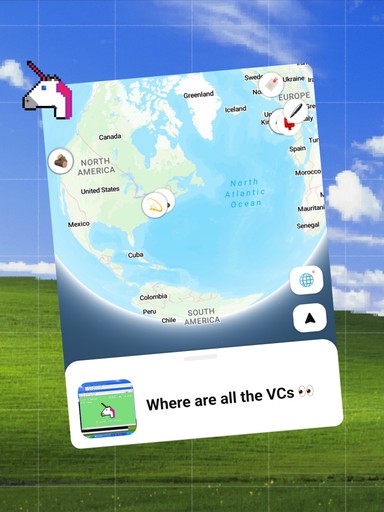
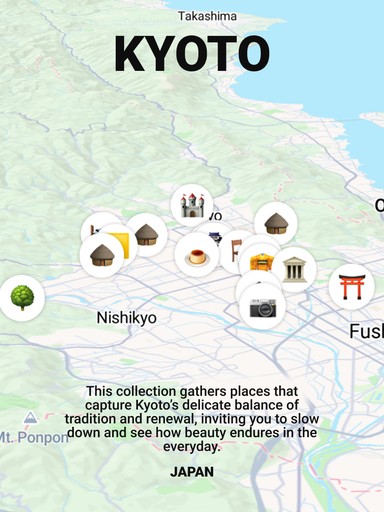
Discover maps & collections
Main UX goal
Deliver seamless translation between the map and content shown on the bottom sheet.
However, easier said than done, it turns out to be one of the hardest challenges for us to work on. We spent weeks investigating and integrating Mapbox and Flutter to find a solution. After weeks of grinding, we finally achieved the fluid UX shown in the screen recordings.
Read more
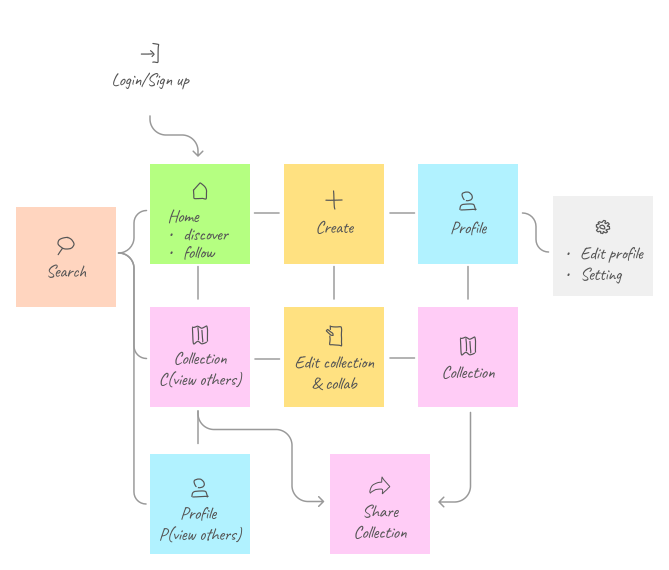
Editing content
To create
/ edit collection
Via within collection
User profile
Via popup Bottomsheet
Locarie 2.0 MVP
Branding & Marketing
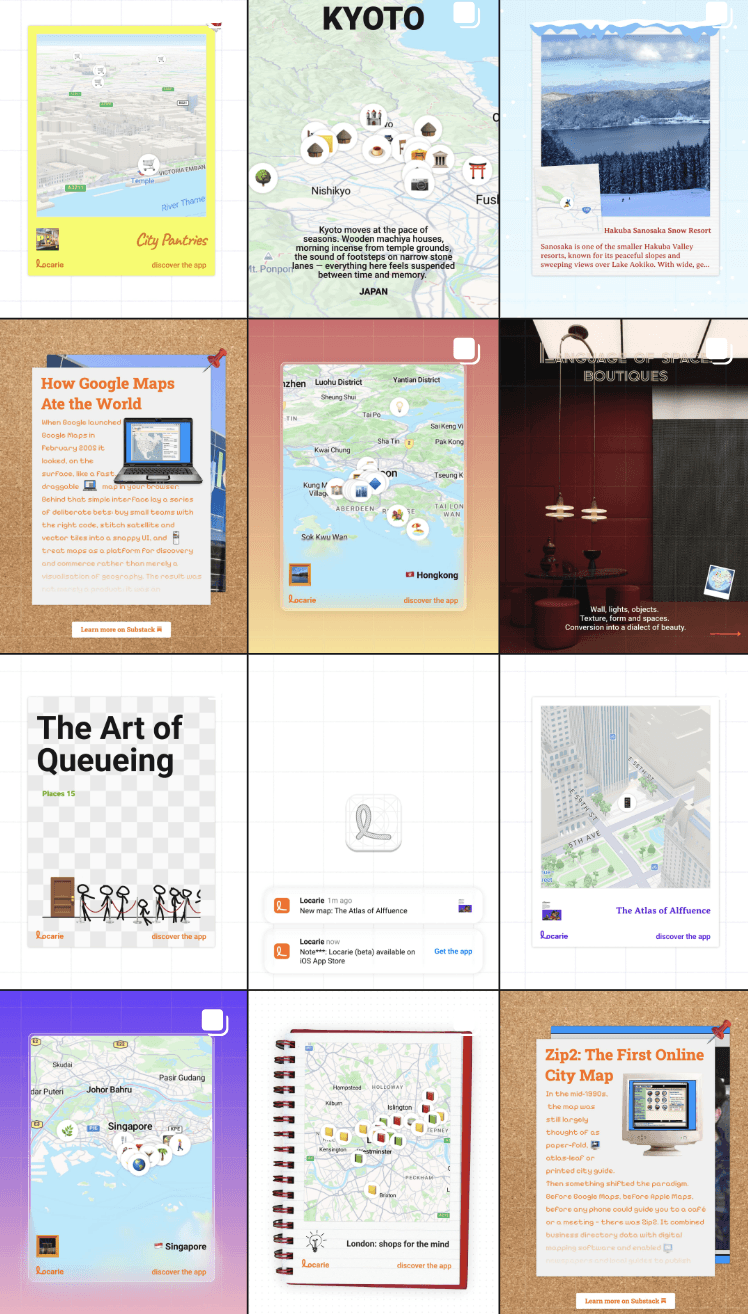
When building Locarie, our goal was to position it as a fun, design-led map-based space for users to reconnect with the physical world, aimed at 18-40-year-old tech-savvy, experience-first users. We intentionally leaned into playfulness, emojis, and vibrancy, while avoiding the traditional cold minimal tone of traditional map products and trend chasing aesthetics of social media products. The idea was to create something that felt alive, vibrant, rather than just another map product.
Read more
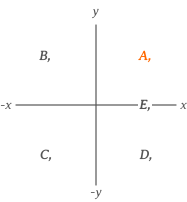
Corresponding X,Y digram illustrate the competition landscape: A, Our position. B, Social Medias. C, Notions. D, Google map. E, Pam Pam/Pi travel.
y
=
Easy to create personal content
-y
=
Hard to create personal content
x
=
Hign spatial (map-base UX)
-x
=
Low spatial (feeds-base UX)

V1.0
Q3 2024 - Q1 2025

App icon
About V1.0, The start of the start-up journey
Locarie 1.0 MVP
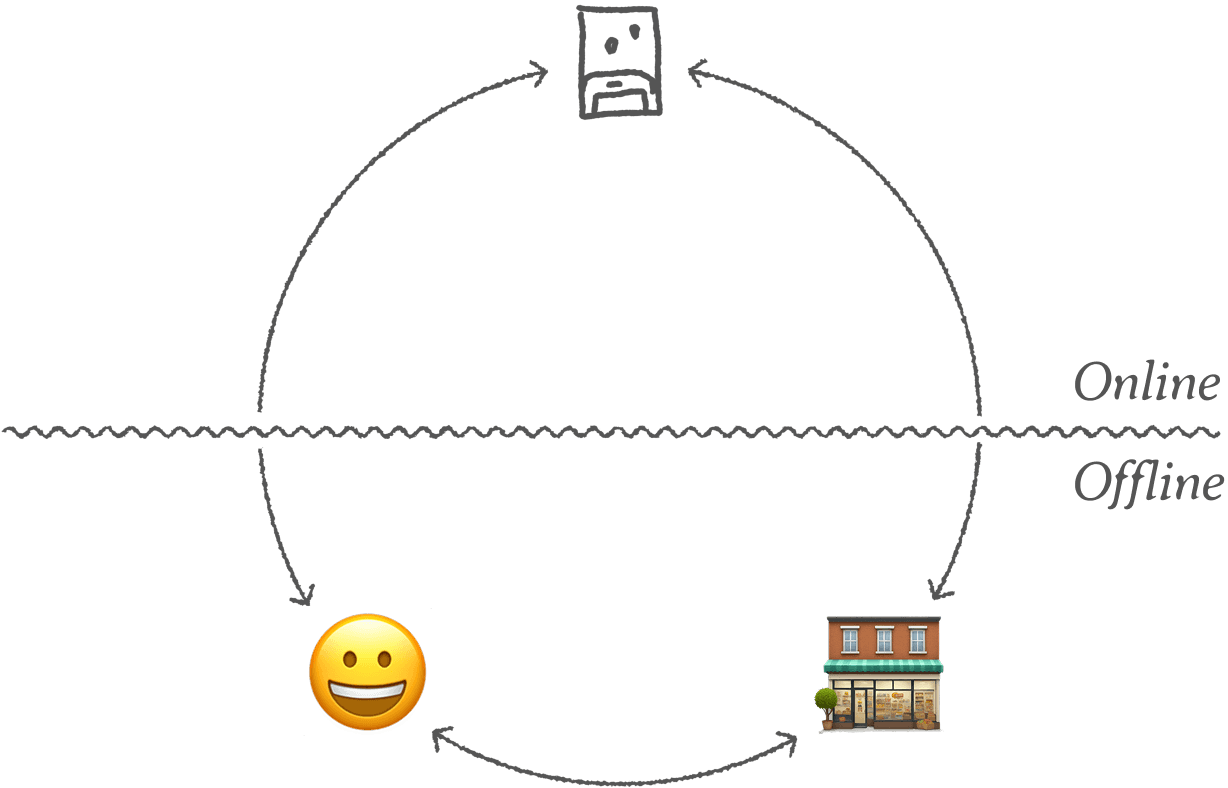

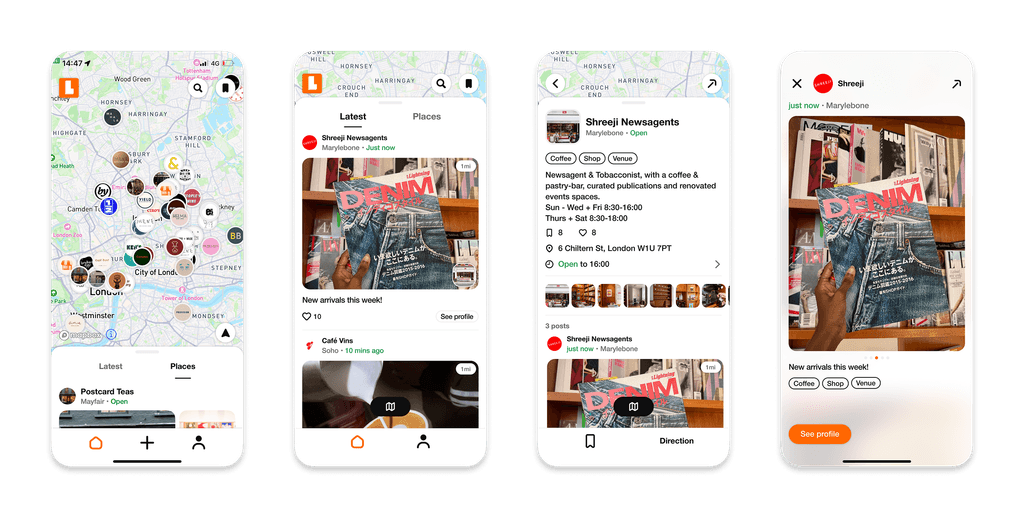
Some statics
~ 80
Businesses across London in 3 months
All Categories
Food & Drinks
Retails
Venues
Art Spaces
…
All Sizes
Known brands - Jolene, E5 Bakehouse, Rochelle Canteen, Shreeji Newsagents…
Medium sizes - Pick Store, Papi…
Small/New - Gégend, Reedstore, Kentish Town Store…
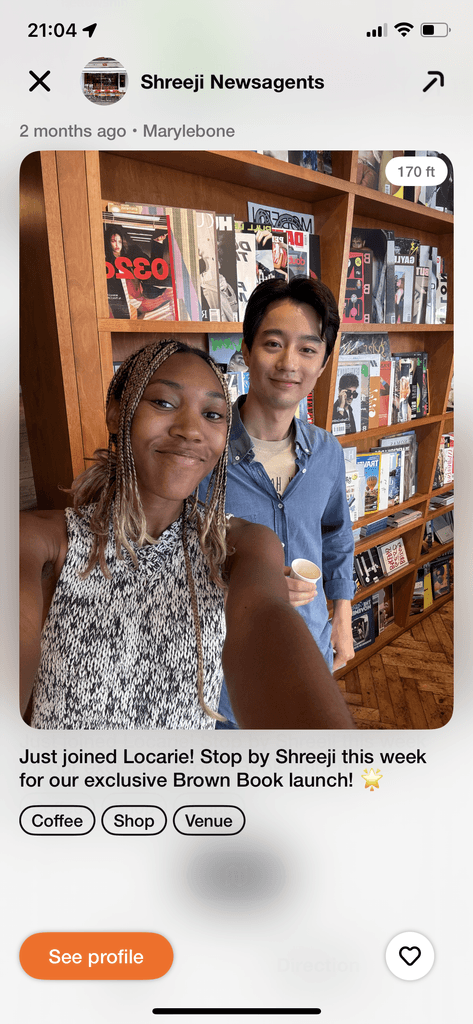
tap to zoom
"I Much prefer it when customers walk through that door and I can talk to them.. The experience is entirely different. So much better.
Whenever we have someone coming in because they saw our post or website, it's really amazing. I really appreciate that"
- Adam, Co-founder, Cloverstore, Eltham
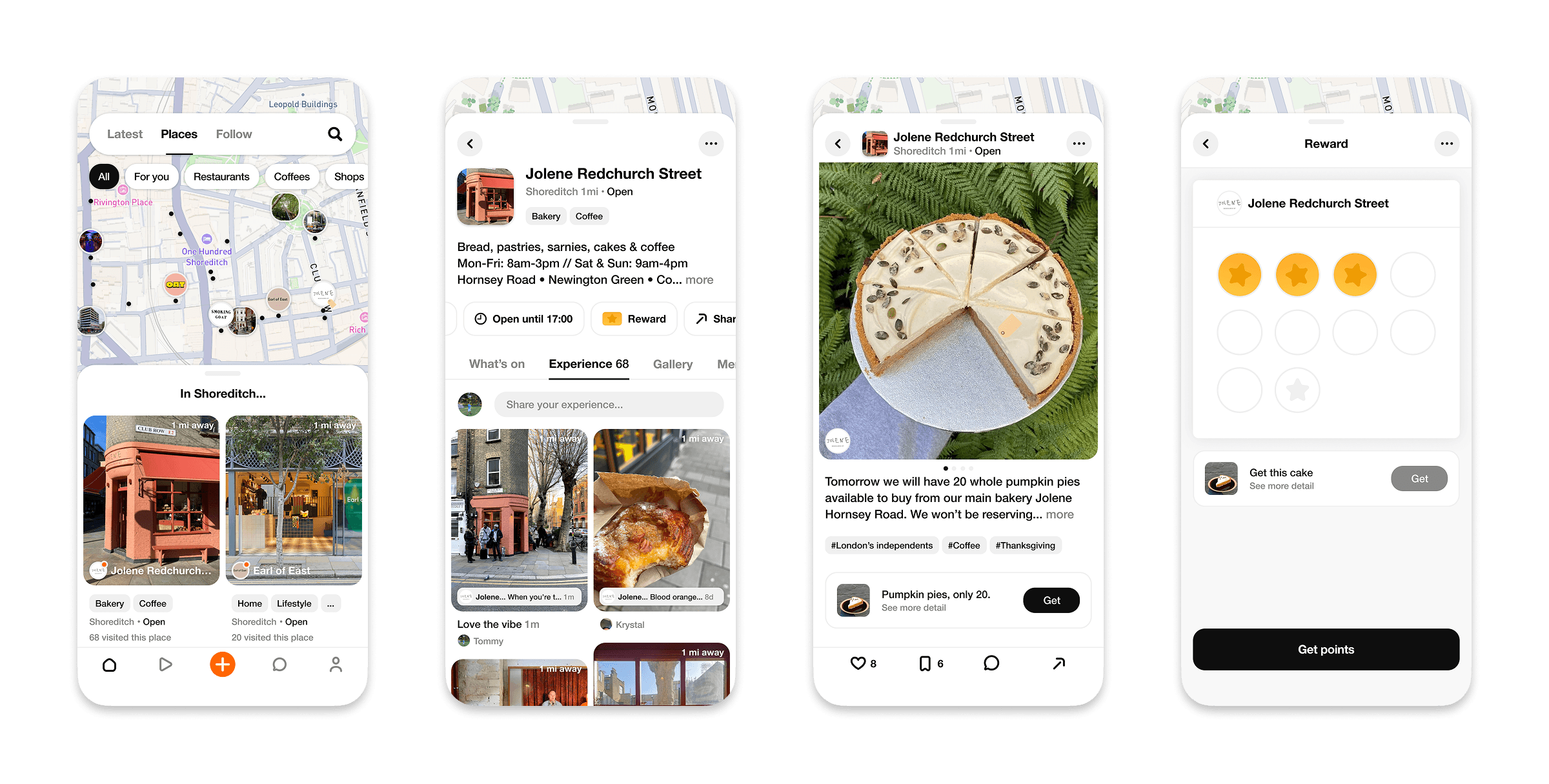
The next iteration design (concept)
Challenge, lesson, and what make it ended.
While, needless to say the two-year journey of startup experience is both painful and rewarding. Like an accelerator that pushes me from a person with dreams and guts into a builder who has the know-how and experience on how to build things, even at a time when there is no prior knowledge of all the steps.
What it taught me the most is that, while first you need to be a great multidimensional task taker who can deliver ideas and taste by taking things into action and making it into reality. Questions such as - How to make up a workflow that can grow efficiently and sustainably? How to squeeze out your creativity and ideas when time and pressure are your biggest enemies? How to tackle all the challenges, even when it’s the stupidest one? and more… These problems truly are important and valuable, and can only be learned from real-time experiences.
While on V1.0, despite the initial adrenaline of getting ~ 80 businesses within the time spent of 3 months. Ultimately, it became unsustainable because of our lack of experience, resources, and technology. Because we couldn’t close the loop of development and operation by getting the app on the same pace with our business and future ideas side.
This led to our second attempt by pivoting into building a consumer map-based social app and partnering with a tech outsourcing team based in Shenzhen. At the beginning, everything looks fine and professional, with my co-founders and me focusing on product design and operation while the outsourcing team works on the engineering side of the project.
However, like all product developments, sooner or later, things will get more complex, and problems will start to appear, such as miscommunications, differences between our designs and coded products, and technical barriers. Examples such as achieving a seamless transition map and bottom sheet transition (shown in the V2.0 section) took us weeks to debug.
There was a saying that if you are developing software, you should always be the ones who build it, and often outsourcing won’t work because the work is very tedious and requires a high level of iteration, because you won’t get it right at one go. As the prophecy turns true into reality, soon we hit a barrier, then more barriers. Delays come with delays, and adding up the cost, time, and our morale with ourselves and the outsourcing team.
We managed to release the app onto the App Store and Google Play, but as I mentioned previously, building a product involves high levels of iteration through the new problems and bugs that you discover. This led our way of working, i.e., out sourcing very unsustainable, inefficient, and costly. And ultimately, with no unlimited stream of funding and people to work on, this brought the project to an end.
As I am writing this, I am still exploring the path during my personal time as a fun project on how to continue the development of building a new map-based social platform. And I planned to start from the ground zero all over again, as this time I will try to be a sole independent developer, thanks to the prior two years of perspective and AI that gives me the confidence to design and develop on my own as a passion project.
And all I need is to keep grinding, iterating, and growing.
Read more

tommyyen.space